
As part of the supply chain, Chung Jye Group understands that environmental sustainability is not just a passive slogan, but requires proactive action from the enterprise.
Through the selection of raw materials, improvement of process equipment, staff education and training, and more, we pursue step-by-step improvements that embed environmental friendliness into the Group's operating philosophy,
putting into practice the protection of our planet, carbon reduction management, and climate change mitigation.
Environmental Management Policy
Strictly comply with environmental regulations in operating regions, international standards, and supply chain environmental protection requirements to ensure all operational activities are legal and compliant.
Introduce internationally recognized environmental management assessment tools (e.g., ISO 14001 Environmental Management System, Higg FEM Facility Environmental Module), establishing standardized governance mechanisms.
Implement green management across the product life cycle, including eco-friendly product design, green-labeled raw material procurement, energy-efficient manufacturing, and low-carbon logistics routing to minimize negative ecological footprints.
Regularly conduct organizational greenhouse gas inventories to identify emission hotspots, establishing transparent data tracking as an empirical basis for climate mitigation strategies.
Enhance internal employee environmental consciousness, build green collaborative partnerships across the supply chain, and promote supplier environmental assessments to collectively advance value chain sustainability.
Environmental Management Measures
Chung Jye Group attaches great importance to the potential environmental impacts of operations. Following local environmental laws, international brand customer requirements, and supply chain environmental standards, we progressively establish robust environmental and energy management systems. The Group enacted the "Regulations for Climate Change, Environmental and Energy Management" as governance guidelines for energy efficiency, GHG inventory, renewable energy utilization, resource circulation, pollution prevention, and employee environmental education. The Group upholds "Compliance with Laws, Prevention First, Risk Control, and Continuous Improvement" as our core environmental management principles. Our environmental policy encompasses regulatory compliance, management tool implementation, green product life cycle governance, organizational GHG inventory, and employee environmental awareness. Production sites in China have implemented ISO 14001 and continuously advance "Three Wastes" (exhaust, wastewater, solid waste) compliant discharge, energy conservation, comprehensive waste utilization, and pollution prevention; the Ninh Binh facility in Vietnam currently adopts Higg FEM, local environmental regulations, and brand standards as foundational baselines, steadily enhancing management maturity through environmental risk assessments, third-party testing, anomaly reporting, and improvement mechanisms. Looking ahead, the Group will continuously strengthen environmental governance systems, data tracking capabilities, and low-carbon transition actions tailored to regional operational conditions.
Compliance
Tools Adoption
Life Cycle
GHG Inventory
Awareness
Operational Facilities Environmental Management Status
China Region
- Select facilities have implemented ISO 14001 Environmental Management System
- Continuously promoting "Three Wastes" compliance, energy conservation, comprehensive waste utilization, and pollution prevention
Vietnam (Ninh Binh)
- Adopting Higg FEM, local environmental regulations, and brand requirements as foundational management standards
- Progressively elevating management maturity via environmental risk assessments, third-party testing, anomaly reporting, and corrective action mechanisms
Energy Management Policy
Effectively enhance energy utilization efficiency across the company, progressively optimizing electrical and water facilities to achieve carbon reduction targets per unit of product.
- (1) Distribution Optimization: Maintain power supply voltages within rated operational limits, ensure transformer secondary voltages match equipment ratings, and maintain optimal ventilation and climate control in equipment rooms.
- (2) High-Efficiency Chillers: Prioritize high-efficiency smart chiller units when constructing or replacing air conditioning systems; projects adding 300 RT or more must evaluate ice thermal storage feasibility and incorporate building shading/insulation to minimize cooling loads.
- (3) Preventive Maintenance: Regularly clean HVAC filters, cooling towers, and lighting fixtures, replacing worn components promptly to sustain peak operational efficiency.
Leverage digital energy management systems for real-time monitoring and data analytics, elevating decision precision and continuously tracking conservation performance.
- (1) Precise Climate Control: Designate responsible personnel or automated controls for temperature management; minimize central AC operation during consecutive holidays or low-occupancy overtime to prevent inefficient low-load running.
Advance circular economy practices and establish manufacturing resource cycling mechanisms, implementing raw material reduction, water recycling, material reuse, and waste reclamation.
- (1) Green Office: Reduce paper use, mandate double-sided printing, and establish paper reuse zones; verify copy quantities in advance to avoid paper waste.
- (2) Renewable Energy: Evaluate and deploy on-site renewable energy and green power procurement, increasing renewable energy shares to tangibly reduce Scope 2 greenhouse gas emissions.
- (3) Low-Carbon Sourcing: Prioritize computers, office equipment, and LED lighting fixtures certified with eco-labels or energy-efficiency marks.
- (4) Fugitive Emission Prevention: Conduct periodic HVAC inspections to prevent fugitive leakage of refrigerants and greenhouse gases.
Align with international decarbonization commitments and brand customer supply chain requirements to progressively achieve long-term net-zero emissions.
- (1) Equipment Modernization: Systematically phase out low-efficiency appliances (traditional fluorescent lamps, incandescent bulbs) and configure computers to sleep after 30 minutes of inactivity to eliminate standby losses.
Strengthen environmental and energy education and training to foster a company-wide consensus on energy conservation and carbon mitigation.
- (1) Energy-Saving Habits: Promote habit of turning off idle lights and equipment, confirming power shutdown before leaving, and optimizing natural daylight.
- (2) Certified Maintenance: Require vendor signature verification on routine maintenance logs to maintain institutionalized management.
Energy Management Measures
Energy consumption and greenhouse gas (GHG) emissions represent the core management focus of Chung Jye Group's low-carbon transformation. In accordance with the company's "Climate Change, Environmental and Energy Management Regulations," we continuously promote energy efficiency improvements, renewable energy adoption, GHG data management, and carbon mitigation measures. In alignment with competent authority sustainability disclosure schedules and major brand customers' supply chain decarbonization mandates, we progressively enhance the completeness, traceability, and management efficacy of our energy and carbon data. The Group's primary energy consumption includes purchased electricity, LPG, diesel, gasoline, and other operational fuels. Primary operating facilities implement solar PV installations, green electricity procurement, I-REC certificates, energy-saving equipment retrofits, HVAC and lighting management, digital energy monitoring, and employee conservation campaigns to reduce energy consumption and GHG emission intensity.
| Management Dimension | Management Plan | Key Actions | Tracking Method |
|---|---|---|---|
| Energy Consumption Inventory | Establish energy itemization and consumption datasets | Inventory purchased electricity, LPG, diesel, gasoline, and other fuel usage | Annual energy data compilation, energy intensity tracking |
| Energy Efficiency Enhancement | Reduce energy consumption per unit of output | Equipment optimization, HVAC efficiency retrofits, high-efficiency motors, LED lighting, energy-efficient machinery upgrades | Electricity consumption, equipment retrofit records, energy-saving project execution |
| Digital Energy Management | Strengthen real-time energy visibility and tracking | Adopt energy management tools tailored to facility conditions and reinforce energy database systems | Power monitoring, plant-level consumption tracking, anomaly notification logs |
| Renewable Energy Promotion | Increase renewable energy utilization proportion | Deploy rooftop solar PV systems, procure green power and I-REC certificates | Renewable generation volume, renewable electricity ratio |
| Energy Conservation Education | Cultivate employee energy-saving consciousness | Advocate switching off lights, powering down idle equipment, conscious power use | Training session records, routine patrol inspection logs |
| Management System Evaluation | Evaluate energy management system adoption based on site readiness | Assess feasibility of implementing ISO 50001 or other energy management tools based on local operational maturity and requirements. | Implementation planning, management tool adoption status, improvement tracking |
Current Energy and GHG Target Settings
| Item | Current Phased Target | 2025 Implementation Focus | Future Planned Actions |
|---|---|---|---|
| Energy Consumption Target | -3% Annual Reduction |
|
|
| Renewable Energy Target | 100% Renewable Electricity by 2030 |
|
|
| GHG Reduction Target | -4.2% Annual Reduction |
|
|
Renewable Energy: Solar Power Project
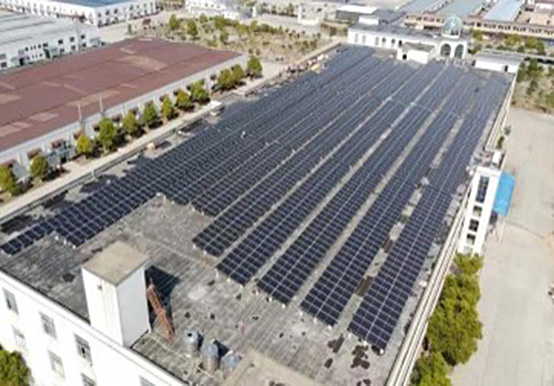
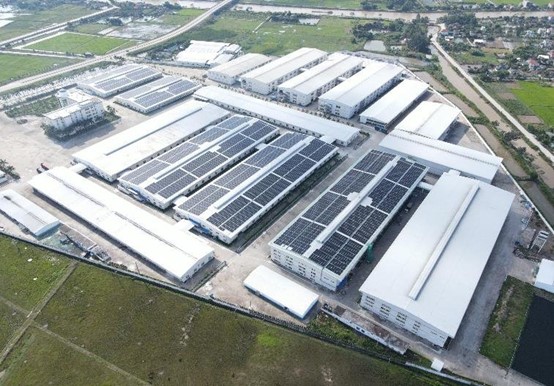
In 2023, Chung Jye Group launched the "Renewable Energy - Solar Power Project," using green electricity to reduce the carbon emissions generated by conventional power production and effectively mitigate the impact on the environment. Since 2023, our factories in Vietnam and China have been progressively switching their electricity sources to solar power, with a goal of having over 50% green electricity at our Vietnam and China facilities by 2025, and reaching 100% green electricity before 2030.

Water Resource Management Policy
Implement surface-mounted piping across water supply networks and track daily production water meters to minimize water loss and increase leakage detection rates.
Track water usage regularly, conduct monthly inspections of domestic water networks, repair/replace leaking valves promptly, and install sub-meters to monitor usage and leaks.
Proactively regulate manufacturing process water, equipment cooling, facilities cleaning, and employee domestic water consumption.
Improve water efficiency by installing sensor-activated faucets, restricting flow velocities, and optimizing outlet volume.
Drive circular economy mechanisms, establish domestic wastewater reclamation and reuse systems, and maximize reclaimed water reuse to reduce municipal freshwater withdrawal.
Deploy wastewater treatment stations and online monitoring systems for COD (Chemical Oxygen Demand), ammonia nitrogen, and pH to guarantee compliant discharge.
Obtain ZDHC (Zero Discharge of Hazardous Chemicals) compliance certifications, continuously managing and increasing wastewater reclamation rates.
Regularly utilize international water risk assessment tools to evaluate water scarcity across operational sites and formulate drought contingency plans to strengthen water resilience.
Water Resource Management Measures
Chung Jye Group places high importance on water resource usage and discharge management across all operating facilities. Primary water withdrawal originates from municipal tap water, utilized in footwear manufacturing processes, equipment operations, employee living, cafeteria facilities, and plant sanitation. In accordance with local environmental regulations, brand client criteria, and internal management frameworks, the Group actively governs withdrawal, consumption, discharge, and wastewater treatment to mitigate operational water impacts.
To identify water stress across primary locations, Chung Jye references the World Wide Fund for Nature (WWF) Water Risk Filter to assess overseas production bases. Results demonstrate that except for select facilities in Vietnam located in higher water stress zones, other primary manufacturing facilities are currently situated outside high water risk regions. The Group enforces differentiated water management measures tailored to local water stress levels.
To strengthen water governance, Chung Jye formulated water policies setting phased conservation targets aiming for a 3% annual reduction in total water consumption or water intensity compared to the previous year. Through water metering, leak audits, preventive maintenance, process water optimization, conservation campaigns, and wastewater treatment, water efficiency is systematically enhanced. In 2025, total water withdrawal across Taiwan HQ, China Shanggao, and Vietnam Ninh Binh reached 280.69 million liters; subsequent tracking will focus on water intensity and hotspot management with rolling adjustments.
Chung Jye Group Water Resource Utilization Overview
Equipment Cooling
Used in cooling loops and machinery without direct material contact
Equipment Sanitation
Used for cleaning machinery, pipelines, and workshop floors
Office & Living
Restrooms, staff cafeterias, and drinking water facilities
Production Water
Used for washing outsoles, screen plates, and thermoforming molds
Water Goals, Key Indicators & Measures
| Management Goal | Key Indicator | Action Measures | 2025 Performance |
|---|---|---|---|
| Water Use Efficiency | 3% Annual Reduction | Regularly track consumption per plant, identify abnormal spikes, and drive conservation projects | 8,900 MT Water Reclaimed |
| Discharge & Wastewater | ZDHC Discharge Metrics | Inspect domestic supply lines, repair/replace leaking fixtures promptly, and strengthen supervision. | Verified & Passed |
| Leakage Minimization | Facility anomaly & leakage inspection | Install independent meters across usage zones to monitor consumption and pipeline integrity. | 0 Leaks Detected |
| Employee Awareness | Water management training | Conduct water conservation campaigns and educate employees on rapid anomaly reporting. | Multi-channel Implemented |
ZDHC Zero Discharge of Hazardous Chemicals & Online Water Quality Monitoring
ZDHC StandardTo refine water topic management, Ninh Binh (Vietnam) adheres to regional regulations and brand client mandates, obtaining ZDHC (Zero Discharge of Hazardous Chemicals) wastewater verification while boosting wastewater reclamation and effluent quality control. All bases execute drainage, wastewater treatment, and compulsory testing to ensure compliance with standards. Looking ahead, the Group will continuously upgrade water data infrastructure covering withdrawal, usage allocation, discharge, reclamation, and lab results to guide future conservation roadmaps.
Current Water Goal Setting & Action Plan
| Item | Interim Setting | 2025 Key Initiatives | Future Action Plan |
|---|---|---|---|
| Water Management Goal | 3% Annual Reduction |
|
|
Waste Management Policy
Explicitly define and establish categories for all wastes: production scrap, general waste (including office and domestic waste), food waste, and hazardous industrial waste.
Establish standard operating procedures for production scrap recycling (e.g., rubber, EVA offcuts), regulating circular reuse per quality standards, and minimizing source resource loss via mold optimization and precision cutting.
Promote general waste reduction at the source, execute daily weighing and categorized tracking, and continuously monitor annual general waste volumes to set annual reduction targets.
Strictly enforce classification, labeling, and storage controls for hazardous industrial waste (e.g., spent chemical containers, solvent-containing waste), partnering with certified professional vendors to prevent contamination.
Embrace the international "Zero Waste to Landfill" philosophy, continuously optimizing waste disposal routes and increasing the proportion of resource recycling and energy recovery.
Waste Management Measures
During footwear manufacturing and business operations, various wastes arise from raw material usage, production processes, and day-to-day facilities. Failure to properly sort, store, and treat wastes may cause environmental pollution and result in non-compliance, unmet client expectations, and operational risks. Therefore, Chung Jye Group designates waste governance as a core environmental priority, driving waste minimization, sorted management, and compliant disposal in accordance with regional regulations and international client requirements.
Vietnam (Ninh Binh Plant)
To systematically track waste management performance, Ninh Binh set a target of 100% waste recovery and resource diversion by 2030. In 2025, the recovery rate reached 75.6%, with a co-processing rate of 24.4%. Per client guidelines, an annual target of 5% recycled rubber powder circular reuse is maintained. In 2025, total waste declined by 1% compared to 2024, and the recycling proportion of rubber powder achieved 100%, aligned with product schedules and order allocations.
China Shanggao Plant
The China facilities utilize rigorous data tracking, vetted professional vendors, and dedicated personnel for oversight. Following a 5% drop across the 2021–2024 cycle, a new baseline was established in 2025 targeting a 3% annual reduction. In 2025, Shanggao acquired 14 automated computer cutters replacing traditional die-cutting presses, slashing waste by 20.4 metric tons (10% unit waste reduction, +4% recycling rate).
Since implementing ISO 14001 Environmental Management Systems, the Shangjie plant has institutionalized sorted collection and lawful diversion. In September 2025, the Tianxin facility achieved Gold Level Zero Waste to Landfill Certification with a 95% diversion rate.
Waste Transfer & Disposal Process Management
Generation
Process scrap & general wastesSegregation
Recyclable, general & hazardousCollection
Station weighing & daily trackingStorage
Dedicated zones & sealed containmentTransfer
Licensed vendor manifest trackingFinal Disposal
Recycling, co-processing & zero landfillTo guarantee compliance and operational consistency, Chung Jye Group instituted the Waste Classification and Disposal Procedures per regional laws and client requirements, governing the full life cycle from generation, segregation, collection, storage, and transport to final disposal.
On-site facilities sort wastes into recyclables, general refuse, and hazardous materials with designated containment areas. Hazardous waste is placed in sealed containers with secondary containment, and subsequent transport is carried out by legally licensed contractors.
Current Waste Target Setting & Action Plan
| Item | Interim Setting | 2025 Key Initiatives | Future Action Plan |
|---|---|---|---|
| Waste Management Target | 3% Annual Reduction |
|
|
Air Quality Management Policy
Install catalytic combustion equipment to regularly monitor emission data for benzene, toluene, xylene, particulates, non-methane hydrocarbons, and VOCs, utilizing catalytic combustion technology to effectively reduce carbon emissions.
Upgrade fixed glass vents into openable ventilation designs to enhance natural airflow, lower indoor plant temperatures, and reduce the need for air conditioning and cooling equipment.
Prioritize low-volatile, eco-friendly raw materials (e.g., water-based solvents) to curb VOC generation at the source, coordinated with exhaust filtration systems to protect local air quality and community safety.
Air Quality Management Measures
Refrigerant & Ozone Depleting Substances (ODS) Inventory
GHG ProtocolIn accordance with the GHG Protocol and relevant environmental regulations, the Company manages and inventories refrigerants utilized across operations, identifying Ozone Depleting Substances (ODS). Refrigerant management covers HVAC and process cooling systems across all sites, tracking usage and potential leakages through maintenance and replenishment logs as a foundation for environmental risk management and disclosure.
Comprehensive Process Emissions Control & Capital Investment
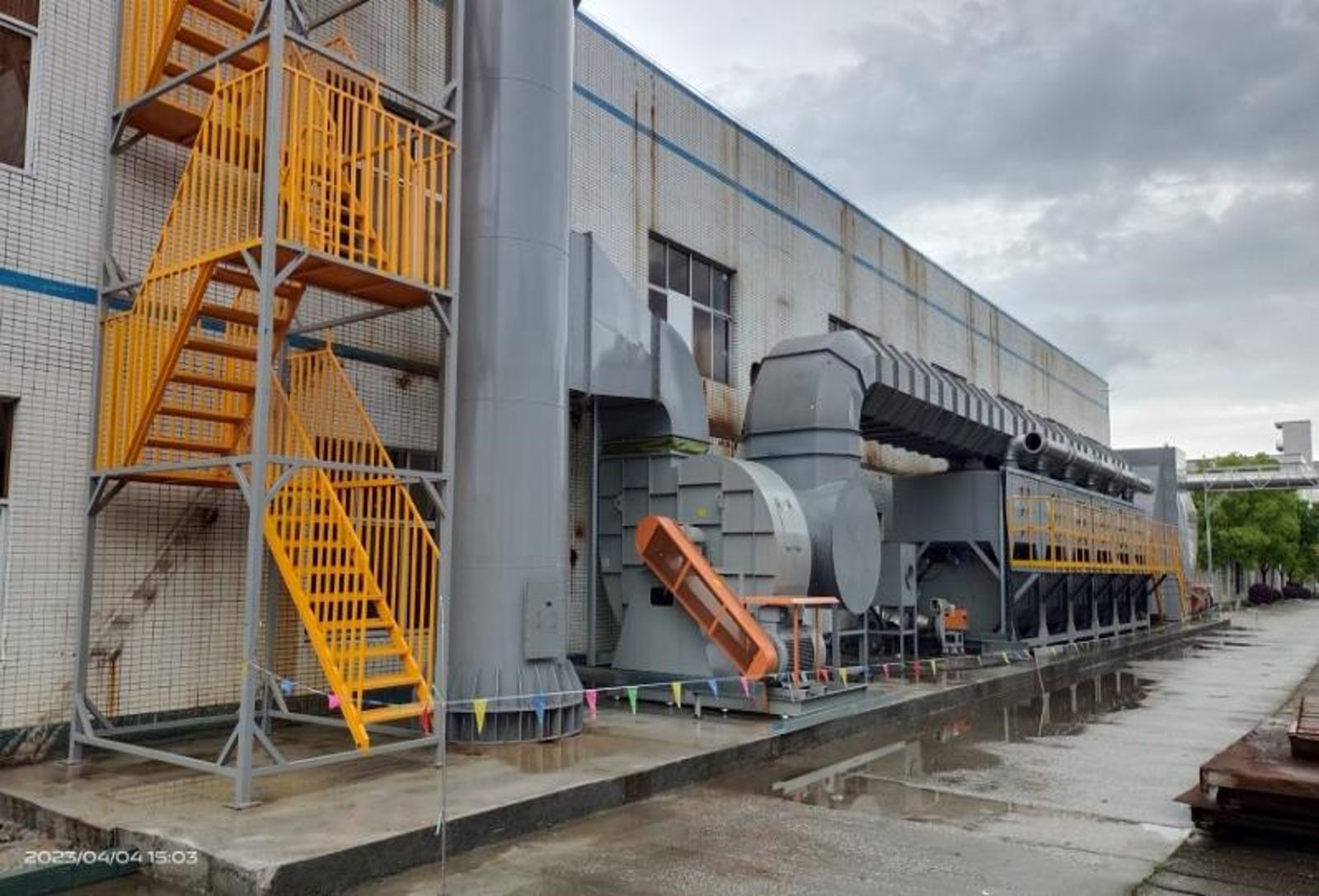
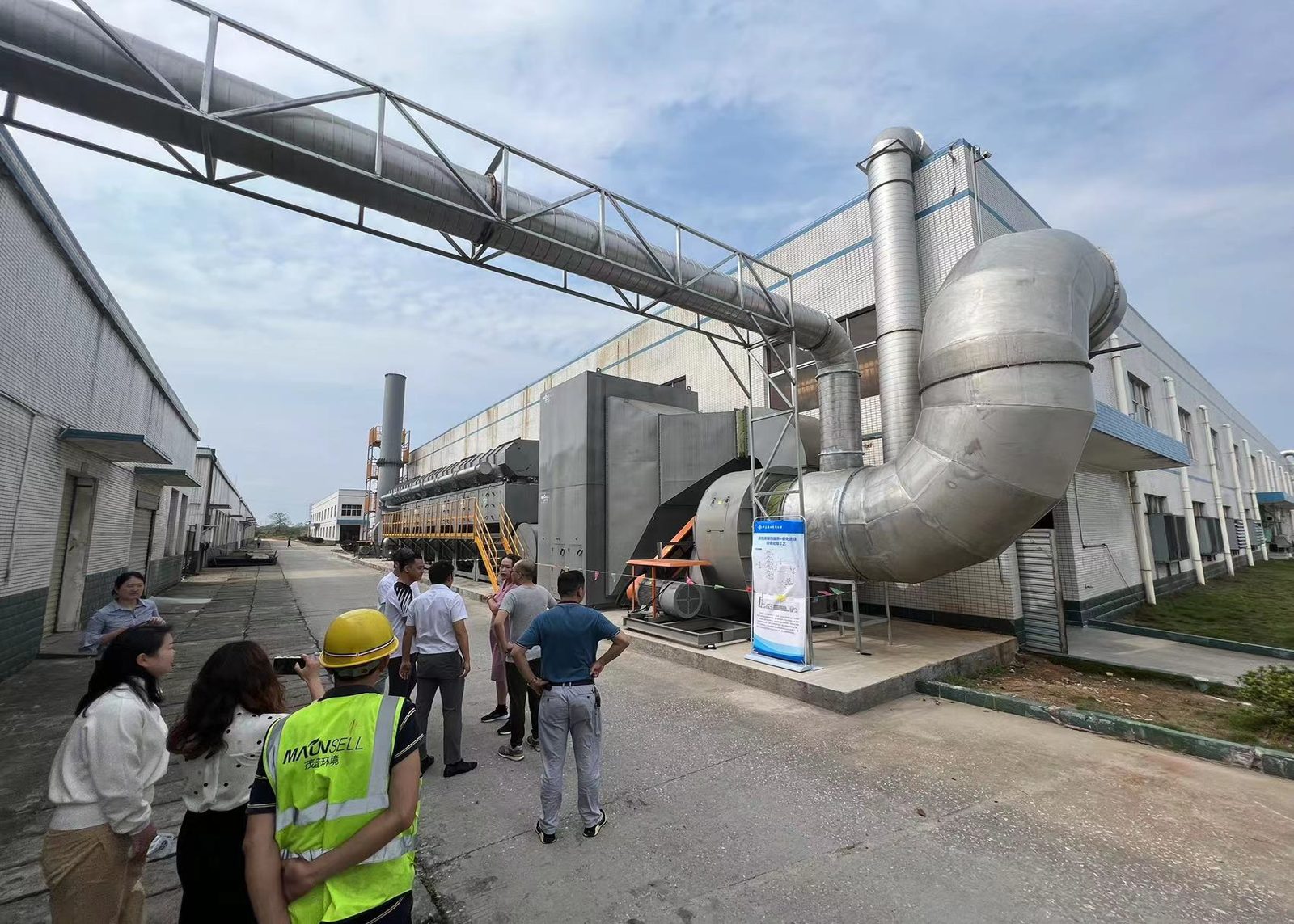
-190 tCO2e/yrFootwear manufacturing emissions are primarily concentrated in upstream raw material production, including fuel combustion, raw material manufacturing, and by-products. The Group continually performs emission monitoring and equipment maintenance per local regulations to mitigate environmental impacts. We advance management practices such as emission reduction, gas recovery and treatment, regulatory compliance, inspections, and employee training while actively investing in monitoring equipment. In 2023, the Shanggao facility in China invested NT$31,570,000 to install 3 catalytic combustion systems, regularly monitoring benzene, toluene, xylene, particulates, NMHCs, and VOCs within legal limits, reducing approximately 190 tCO2e annually and surpassing footwear industry benchmarks.
VOC Exhaust Treatment System Track Record
Chung Jye Group has invested over US$2.66 million in advanced VOC exhaust treatment systems. Utilizing catalytic combustion technology, the system effectively lowers carbon footprints and has reduced approximately 190 metric tons of CO2 emissions annually since inception, surpassing footwear industry emission benchmarks and delivering clean, safe, and healthy workspaces for employees.
Biodiversity Policy
In response to international nature conservation initiatives, we follow the mitigation hierarchy principles of avoidance, minimization, restoration, and offsetting. We are committed to reducing the impact of the Group's operations and value chain on natural ecosystems, and reference the Taskforce on Nature-related Financial Disclosures (TNFD) framework to identify, assess, and manage dependencies and impacts on nature.
Newly expanded operating sites and production facilities must avoid High Conservation Value (HCV) areas designated by the International Union for Conservation of Nature (IUCN) and legally protected ecologically sensitive areas. We promote greening with native tree species to preserve local microclimates and habitats.
Implement responsible sourcing and our "Zero Deforestation" commitment by prioritizing raw materials with international sustainability certifications to ensure key agricultural and forestry materials do not involve illegal logging or deforestation.
Integrate chemical and water resource management policies to strictly prevent hazardous substances and non-compliant wastewater from discharging into surrounding rivers and oceans, protecting local aquatic ecosystems and biodiversity.
Biodiversity Management Measures
Facility Planning & Environmental Sensitivity
The Group's primary manufacturing sites are located in China and Vietnam, focusing on footwear production and supply chain activities. During planning stages for new factories or facility expansions, environmental sensitivity assessments are conducted to avoid high-risk development in HCV areas, legally protected zones, or critical habitats, minimizing potential impacts on natural habitats and surrounding ecosystems.
Multi-tiered Pollution Control & Safeguards
Furthermore, the Group integrates chemical, water, and waste management protocols to prevent pollutants from entering adjacent water bodies and natural environments, safeguarding regional aquatic ecology and ambient environmental quality.